
An introduction

Three Pillars. Seven Thematic Areas.

Knowledge, creativity and community are closely related, but each brings its own questions and responsibilities. Learning and scientific understanding influence public choices. Culture and artistic expression preserve experience and give it new meaning. Participation in community life creates opportunities for people to act on what they know.

Our seven thematic areas give these interests a clear structure. They also recognise that education, technology, culture and environmental concerns often intersect in the lives of the people and communities we work with.

Pillar 01

Knowledge

Knowledge influences how people understand their circumstances, participate in society and respond to the opportunities and challenges before them.

Across Africa, educators, researchers, journalists, writers and institutions contribute to a growing body of knowledge about the continent and the wider world. The value of this work depends in part on whether people can access, understand and use the information it produces.

Our Knowledge pillar brings together education and lifelong learning, the communication and scrutiny of scientific research, and equitable participation in a digital society.

Learning changes the way people see the world. It develops confidence, strengthens judgement and makes it possible to explore ideas that may once have seemed out of reach.

Literacy is an essential starting point. Reading and writing help people access information, express themselves and take part in everyday life. But learning also involves asking questions, understanding numbers, thinking critically and finding ways to solve problems. These abilities continue to develop throughout a person’s life.

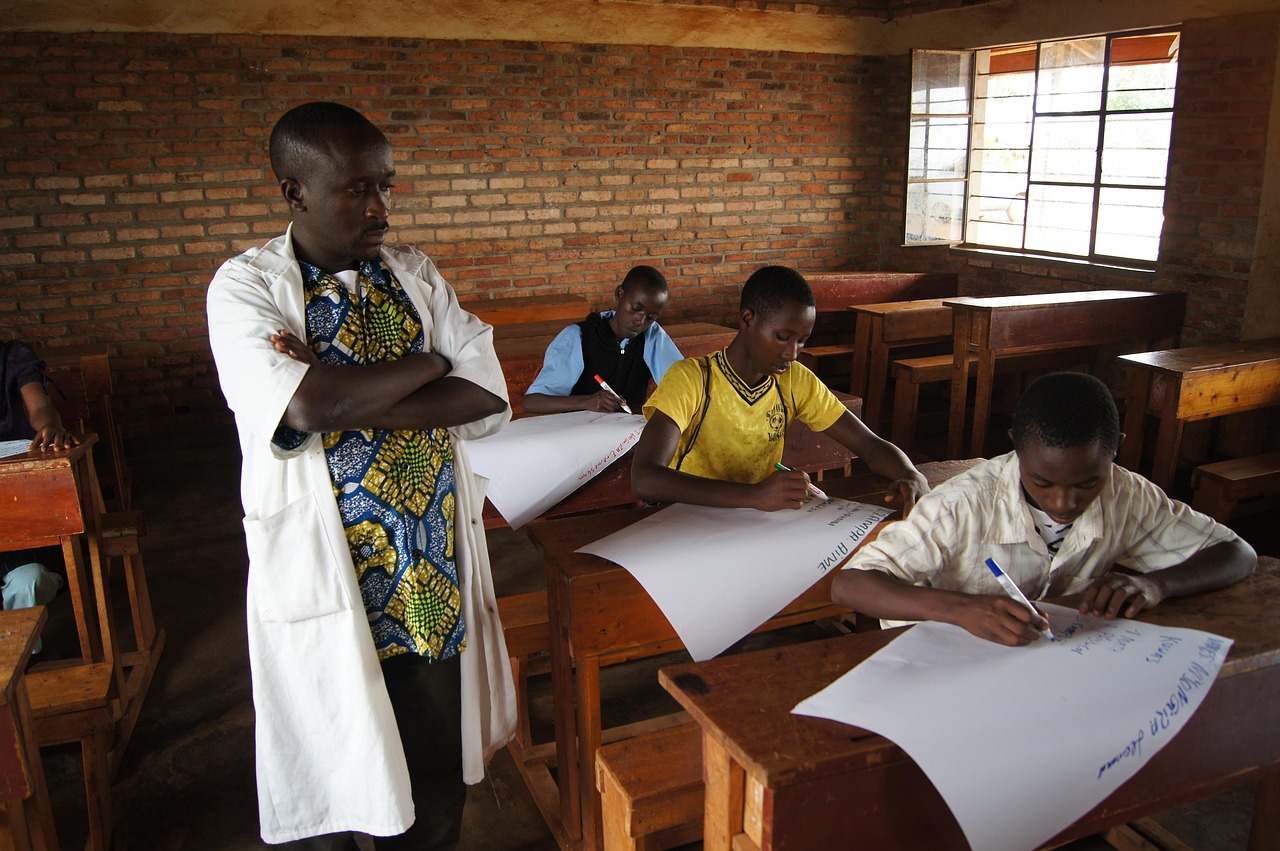
Education happens in many places. Schools and universities play an important role, as do families, libraries, workplaces and community spaces. What matters is that people have opportunities to learn and the resources to make use of those opportunities.

We work to widen access to learning and strengthen the quality and relevance of educational resources. Through Sisi Afrika Books, we have contributed to children’s literature and educational publishing in different formats, bringing writers, illustrators and institutional partners together to create material for young readers. Language, cost, location and technology all influence access, and our approach takes these barriers seriously.

Scientific knowledge has a profound influence on contemporary life. Advances in medicine, agriculture, environmental science, engineering and digital technology shape public policy, economic activity and the choices people make every day.

Research findings often emerge through specialised institutions, academic journals and technical publications. Their wider significance becomes clearer when they are examined, explained and discussed in ways that connect scientific evidence with the experiences and concerns of society.

Science communication makes research accessible. Scientific journalism also tests claims, examines uncertainty, questions the use of evidence and investigates the institutions and decisions that shape scientific developments. Both are essential to informed public discussion.

Africa has important scientific stories to tell. They include research undertaken on the continent, the application of technology in everyday life and the choices societies face in areas such as health, agriculture, energy and the environment. They also include questions about who benefits from scientific progress and whose concerns receive attention.

We see scientific journalism as part of a wider culture of inquiry. Through Sisi Afrika Magazine, the Foundation has experience of reporting and commentary on science, technology, health and environmental questions. We value journalism that helps readers examine evidence, understand uncertainty and participate in informed public discussion.

Technology is changing how people learn, communicate, work and create. A mobile phone can connect someone to information, a digital platform can open access to a service, and creative software can give a young person an entirely new way to express an idea.

But access is not equal. Devices and internet connections can be expensive or unreliable. People may have little opportunity to develop digital skills, and some services are difficult to use without the right equipment or support.

Digital inclusion is about making participation possible. It includes access to technology, the skills to use it confidently and the ability to recognise risks such as misinformation, fraud and the misuse of personal information.

Our work spans digital literacy, access to learning resources and the creative and practical uses of technology. We connect digital skills with opportunities for children and young people to move beyond using digital tools to understanding them and creating with them.

For us, digital inclusion connects access with practical capability: the opportunity to learn, create, communicate and participate confidently in an increasingly digital society.

Pillar 02

Creativity

Art and culture are part of how we make sense of our lives. Stories carry memories. Music and visual expression capture experiences and preserve cultural identity.

New creative tools allow people to experiment with forms and reach audiences in different ways. We value the depth of African cultural expression and the people who keep it alive, challenge it and take it in new directions.

Across Africa, histories and identities are carried through languages, stories, music, performance, objects, photographs and countless other forms of expression. Some are preserved in formal collections. Others live in families, communities and the knowledge passed between generations.

Culture is also something people make every day. Writers, artists and performers respond to their surroundings, draw on tradition and develop new ways of seeing familiar experiences.

We document African stories and cultural knowledge through literature, biography, memoir, oral history and other forms of creative expression. Our work also recognises the contributions of visual artists and other practitioners who preserve, interpret and renew cultural heritage.

Preserving a story means paying attention to the people who tell it, the language in which it is told and the context that gives it meaning. It also means recognising the rights and contributions of creative practitioners.

Through Sisi Afrika Magazine and Sisi Afrika Books, the Foundation has contributed to African journalism, biographies, memoirs, oral-history work and publications that preserve personal and professional experiences. This work depends on listening carefully to the people whose stories are being told and respecting their voices.

The creative world is changing quickly. People can now produce animation, podcasts, films, illustrations and interactive work using tools that were once available only in specialised studios.

These possibilities matter because they give more people ways to experiment, tell stories and develop useful skills. A young animator, a writer working with audio or an artist using digital illustration may approach creativity differently, but each is finding a way to turn an idea into something others can experience.

Digital creativity brings together imagination and practical knowledge. It involves learning software and production techniques, but also understanding storytelling, design, collaboration and the choices that make creative work effective.

Sisi Afrika Foundation connects creative expression with technology. Through Sisi Afrika Books, our work includes illustration, ebook and audiobook production, and educational content developed in multiple formats. This experience also supports our work in animation, interactive storytelling and other forms of digital creativity.

We value opportunities for African creators to develop original work, learn from one another and engage with new technologies on their own terms.

Pillar 03

Community

Shared activities can build relationships and create opportunities to participate. Common challenges can bring people together to find practical responses.

A community is shaped by the people who belong to it and the things they do together. Our community work connects youth participation and sport with environmental understanding, public awareness and the relationships that help communities respond to change.

Young people need opportunities to discover what they are good at, develop confidence and take part in activities that matter to them. Sport offers one such opportunity.

Football, in particular, has a remarkable ability to bring people together. A local competition draws in players, coaches, families and supporters. It gives teams something to prepare for, creates moments of achievement and brings energy to shared spaces.

The Sisi Afrika Tournament began as a way to celebrate the December holidays with communities in Siaya County through football. It brings together players, families and supporters for recreation, competition and shared celebration. The event also creates a public gathering where issues affecting young people and the wider community can be discussed.

Grassroots sport contributes to personal development through discipline, teamwork, confidence and leadership, while tournaments bring activity to local communities and create opportunities for small-scale trade and services around the event. Beyond the matches, the tournament’s public-address platform gives invited speakers and community representatives a way to share information and engage participants on education, health, livelihoods, social responsibility and environmental issues. We use this combination of sport and public engagement to encourage awareness, dialogue and community action.

Changes in climate and the environment are affecting how people live. Flooding, drought, water shortages and changing agricultural conditions can have serious consequences for households and communities.

Understanding these issues requires good information. People need to know what is happening, what the evidence shows and how different choices may affect their surroundings. Scientific knowledge matters, but so does the experience of people who live with environmental change.

Climate education takes many forms, from public-interest journalism to stories that help children understand forests, rivers, weather and biodiversity. Sisi Afrika Magazine covers environmental issues through its journalism, while our children’s educational publishing makes environmental themes accessible to young readers through stories and illustrated content. Together, these approaches connect scientific understanding with everyday experience.

Community resilience is equally practical. It concerns access to resources, the ability to prepare for difficulties and the relationships that help people respond when circumstances change. Water, energy, food systems and local knowledge are all part of this conversation.

For Sisi Afrika Foundation, climate education and resilience connect scientific understanding, communication and community life. We bring reliable information, local experience and practical cooperation into conversations about how communities respond to environmental change.

Work with us

Does your work connect with one of these areas?

We welcome collaboration with institutions, researchers, educators, creative professionals and community organisations whose interests connect with ours.